
Your heart does not beat like a metronome.
The time between one heartbeat and the next naturally changes from beat to beat. This variation is called Heart Rate Variability (HRV).
HRV offers a window into how your autonomic nervous system responds to changes in activity, rest, stress, and recovery. Rather than asking whether your heart rate is simply high or low, HRV looks at the subtle changes in heartbeat timing.
This makes HRV useful for understanding patterns of adaptation and recovery over time.
A single HRV reading does not tell you whether your body is "healthy" or "unhealthy." What matters more is how your readings change relative to your own baseline and what was happening around those changes.
For wearable users, consistent tracking can make these patterns easier to see.
Key Takeaways
Heart Rate Variablity measures variation in the time between heartbeats, providing information related to autonomic nervous system activity.
HRV naturally changes with sleep, exercise, stress, alcohol, illness, and other lifestyle factors.
RMSSD is more sensitive to short-term, beat-to-beat changes, while SDNN reflects overall variability across a measurement period.
A single HRV reading should not be treated as a definitive assessment of your health or recovery.
Looking at your own baseline and trends over time can provide more meaningful context.
Smart rings can make continuous HRV tracking more practical by collecting heart-related data during everyday life and sleep.
Body Resilience: How HRV Reflects Adaptation and Recovery
Body resilience is not about never experiencing stress.
Your body is constantly responding to changes in your environment. Exercise creates physical demand. Work can create mental stress. Poor sleep can affect recovery. Even changes in routine can influence how your body responds.
The autonomic nervous system helps regulate many of these responses automatically, including heart rate, breathing, and digestion.
HRV provides one way to observe some of this regulation.
The Autonomic Nervous System
The autonomic nervous system has two major branches that work together:
The sympathetic nervous system is associated with the body's response to activity and stress.
The parasympathetic nervous system is associated with rest and recovery.
These systems are not simply an "on" and "off" switch. They continuously interact as your body responds to changing conditions.
During exercise, for example, sympathetic activity increases to support physical demand. During rest, parasympathetic influence becomes more prominent.
HRV reflects some of the resulting changes in heartbeat timing.
Sympathetic and Parasympathetic Activity
The two branches influence the heart through different signaling pathways.
Autonomic Branch |
General Role |
Relationship to Heart Rate |
|---|---|---|
Sympathetic nervous system |
Supports activity and the body's response to stress |
Can increase heart rate |
Parasympathetic nervous system |
Supports rest and recovery |
Can slow heart rate |
This balance is dynamic rather than fixed.
Your heart rate and HRV can therefore change throughout the day as you move between work, exercise, rest, and sleep.
Why Beat-to-Beat Variation Matters
If the time between every heartbeat were exactly the same, your heart would behave much more like a metronome.
In reality, those intervals naturally vary.
HRV measures this variation. Because autonomic activity influences heartbeat timing, changes in HRV can provide information about how your body is responding to different conditions.
This is why HRV is often used as a physiological signal of adaptation and recovery, rather than simply another heart rate measurement.
The key is to interpret it as a pattern, not a pass-or-fail score.
Rigid heartbeat timing means your body feels strain. A sudden HRV drop signals deep physical fatigue. You lose flexibility when one branch rules too long. Tracking HRV helps you prevent overtraining early.
What Can Influence Your Daily HRV?
HRV is sensitive to many factors, which is one reason it can change from one day to another.
Some common influences include:
Sleep quality and duration
Physical activity and training load
Mental or emotional stress
Alcohol consumption
Illness
Changes in daily routine
Travel and environmental changes
These factors do not affect everyone in exactly the same way.
For this reason, your own baseline is often more useful than comparing your number with a generic target.
Sleep and Circadian Rhythms
Sleep provides an important period for observing HRV because your body is generally less active and less affected by movement during this time.
Sleep also follows a natural circadian rhythm, with changes in autonomic activity occurring across different stages of the night.
A disrupted sleep schedule, insufficient sleep, or other changes to your normal routine may be reflected in your HRV pattern.
This does not mean HRV can tell you exactly why your sleep was poor. Instead, repeated measurements can help you notice relationships between your sleep habits and your own HRV trends.
Consistency is therefore more useful than focusing on one night's number.
Mental Stress and Autonomic Load
Stress is not only a mental experience.
When you experience psychological stress, your autonomic nervous system can respond by shifting toward a state associated with greater alertness and activity.
This can influence heart rate and HRV.
If stress continues over time, changes in your usual HRV pattern may become more noticeable.
Rather than interpreting a lower reading as proof of "high stress," it is more useful to look at whether the change is consistent with other signals in your daily routine.
For example, a period of unusually high workload combined with poor sleep and a change in your usual HRV pattern provides more context than the HRV number alone.
Suppression of Parasympathetic Tone: Long stress fires sympathetic nerves continuously. This weakens the vagal brake. It suppresses vagal tone quickly.
Exercise, Training, and Recovery
Exercise is another major influence on HRV.
A demanding workout places stress on the body, and your autonomic nervous system responds accordingly. It is therefore common for HRV to change during periods of heavier training.
That change is not necessarily negative.
The more useful question is how your HRV responds and returns toward your personal pattern over time.
If you consistently see changes in your HRV alongside changes in training load, sleep, or how you feel, the data can provide additional context for your recovery routine.
This is why HRV is increasingly used alongside other information rather than as a standalone measure of training readiness.
Alcohol and Other Lifestyle Factors
Lifestyle choices can also influence HRV.
Alcohol consumptionharms, for example, can affect autonomic activity during sleep and may be reflected in overnight HRV measurements.
The same principle applies here: a change in HRV after drinking does not mean the number itself represents a diagnosis or a permanent change in health.
Instead, repeated observations can help you understand how particular choices tend to affect your own physiological patterns.
Measuring Baseline HRV with Wearable Technology
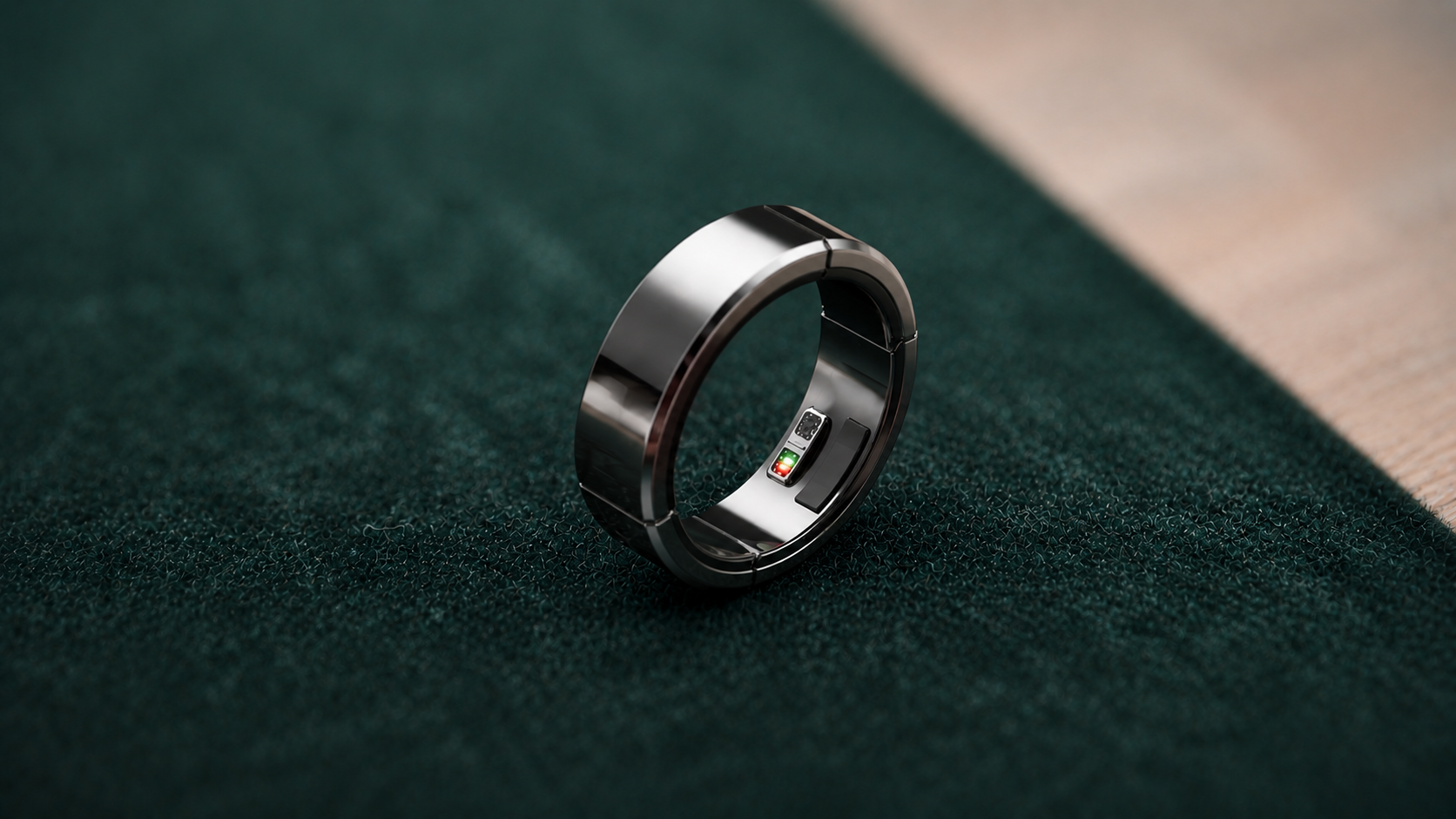
Understanding HRV is only useful when the underlying measurements are consistent.
Traditional approaches may use dedicated heart monitoring equipment, while wearable devices can collect pulse signals using optical sensors.
Smart rings typically use PPG (photoplethysmography) to detect changes in blood volume.
The general process is:
Signal collection — Optical sensors collect pulse signals from the finger.
Signal processing — The system processes the signal and reduces the impact of noise and movement.
Interval detection — The system identifies the timing between heartbeats.
HRV calculation — HRV metrics such as RMSSD and SDNN can be calculated from the recorded intervals.
The quality of the signal matters because HRV calculations depend on accurate heartbeat interval data.
Why Consistent Tracking Matters
HRV naturally fluctuates.
That means one measurement can be difficult to interpret without context.
Consistent tracking creates a much clearer picture.
For example, instead of looking at one unusually low reading, you can compare it with your recent baseline and consider whether there were changes in sleep, exercise, stress, alcohol consumption, or other parts of your routine.
Over time, this turns individual readings into a more useful personal trend.
Building Your Personal HRV Baseline
There is no single HRV value that is ideal for everyone.
Age, fitness, lifestyle, sleep, and many other factors can influence your typical range.
A practical approach is to:
Track consistently
Compare measurements collected under similar conditions
Establish your own baseline
Look at trends instead of isolated readings
Consider lifestyle factors alongside HRV changes
The goal is not to chase a particular number.
The goal is to understand what is normal for you and notice when your pattern changes.
Understanding RMSSD and SDNN
Two HRV metrics are particularly useful for understanding different time scales: RMSSD and SDNN.
RMSSD focuses on short-term changes between successive heartbeat intervals. This makes it more sensitive to relatively fast changes in autonomic activity and useful for observing daily recovery patterns.
SDNN reflects the overall variation of normal-to-normal intervals across a recording period. Its interpretation is more dependent on the length of that recording, making it more useful when looking at broader patterns across longer measurement windows.
Metric |
What It Focuses On |
Practical Perspective |
RMSSD |
Short-term, beat-to-beat variation |
Useful for observing daily recovery and short-term changes |
SDNN |
Overall variation across a recording period |
Useful for observing broader HRV patterns and longer-term trends |
Neither metric is simply "better." They provide different perspectives on HRV.
Short-Term Changes vs. Long-Term Patterns
Think of HRV as a trend rather than a single score.
RMSSD can help you notice relatively quick changes. For example, your overnight RMSSD pattern may differ after a demanding workout or a poor night's sleep.
SDNN provides a broader view of variation across a measurement period and can be useful when looking at longer-term patterns.
Together, the two metrics help illustrate why HRV should be interpreted across different time scales.
A short-term change does not automatically represent a long-term change.
Likewise, a long-term trend should not be inferred from one unusual reading.
The Importance of Continuous Tracking
For HRV, having more consistent data can make it easier to identify meaningful patterns.
This is particularly relevant for wearable devices.
The CIRCUL Ring 2 MAX supports true 24/7 continuous monitoring of HR and HRV, allowing heart-related data to be collected continuously rather than relying only on occasional spot measurements. This continuous approach provides more data points for understanding how your HRV changes across different parts of your day and night.
CIRCUL's SST™ Ultra 2.0 sensor technology and adaptive fit structure are designed to support consistent sensor contact as the ring is worn.
The benefit is not simply having more numbers.
It is having more context around those numbers.
How CIRCUL RING 2 MAX Fits Into HRV Tracking

The value of wearable HRV tracking comes from turning repeated measurements into an understandable personal trend.
With CIRCUL RING 2 MAX, HRV is part of a broader set of wellness measurements that can be tracked continuously.
Rather than treating one HRV reading as a definitive answer, users can look at changes alongside sleep, activity, and everyday routines.
This can help answer practical questions such as:
Does my HRV tend to change after a hard workout?
How does poor sleep affect my usual pattern?
Does alcohol affect my overnight HRV?
How does my HRV change during periods of higher stress?
Is my current reading different from my usual baseline?
These are more useful questions than simply asking whether your HRV number is "good."
Practical Ways to Support Resilience
HRV is a measurement, not a treatment.
The most useful role of HRV is to help you observe patterns and understand how your body responds to changes in your routine.
Prioritize Consistent Sleep
A regular sleep schedule provides your body with a more consistent recovery routine.
Instead of focusing only on one night's sleep score or one HRV reading, look at whether your sleep habits and Heart Rate Variability patterns tend to move together over time.
Balance Training With Recovery
Hard training creates a physiological demand that your body needs time to respond to.
Rather than following a rigid rule based on one HRV reading, consider your HRV alongside training load, sleep, and how you feel.
A sustained change may be more informative than a single low reading.
Pay Attention to Stress
Stress is part of everyday life, but prolonged periods of high demand can influence autonomic patterns.
If you notice changes in HRV during particularly stressful periods, use that information as an opportunity to look at the bigger picture: sleep, workload, activity, and recovery habits.
Use Breathing as a Simple Recovery Practice
Slow, controlled breathing can influence autonomic activity and temporarily change HRV.
Breathing exercises can therefore be a simple way to explore how your HRV responds to different states of relaxation.
The important point is not to chase a higher number during a breathing session, but to understand how your body responds.
HRV Is About Patterns, Not Perfection
One of the biggest mistakes when using HRV data is expecting the number to move upward every day.
But it won't.
HRV naturally fluctuates. A lower reading after a stressful day, poor sleep, or demanding workout does not automatically mean your fitness has declined.
Likewise, a higher reading does not automatically prove that your body is fully recovered.
The more useful approach is to step back and look at the pattern.
What changed? How long did it last? What was happening in your life at the same time?
Those questions turn HRV from a simple number into a more meaningful wellness signal.
FAQ
What does HRV tell you about body resilience?
HRV reflects variation in the timing between heartbeats and is influenced by autonomic nervous system activity.
Changes in your HRV pattern can provide additional context about how your body is responding to factors such as sleep, exercise, stress, and other lifestyle changes.
It should not be used as a standalone measure of health or resilience.
Is higher HRV always better?
No.
HRV varies considerably between individuals and can change naturally from day to day.
Rather than assuming that a higher number is always better, compare your readings with your personal baseline and look for meaningful changes over time.
How quickly can HRV change?
HRV can change relatively quickly in response to factors such as exercise, sleep, stress, alcohol, and changes in routine.
However, short-term fluctuations should not automatically be interpreted as long-term changes in health or fitness.
Why does HRV sometimes drop overnight?
Many factors can influence overnight HRV, including sleep disruption, alcohol consumption, physical strain, stress, illness, and changes in routine.
A single drop does not identify the cause on its own. Looking at the reading alongside your sleep and lifestyle patterns can provide more context.
How does CIRCUL RING 2 MAX track HRV?
CIRCUL RING 2 MAX uses optical PPG sensing to collect heart-related data, which can then be used to calculate HRV metrics such as RMSSD and SDNN.
The ring supports true 24/7 continuous monitoring of HR and HRV, helping build a more complete picture of your personal HRV patterns over time.
The Bottom Line
HRV gives us a different way to look at the heart.
Instead of focusing only on how fast the heart beats, it looks at the changing intervals between beats and provides information related to autonomic nervous system activity.
Those changes can be influenced by sleep, exercise, stress, alcohol, illness, and everyday life.
That is why the most meaningful HRV insight is rarely a single number.
It is the pattern.
By tracking consistently and comparing your data with your own baseline, you can better understand how your body responds to the demands of everyday life.
And with a wearable such as CIRCUL RING 2 MAX, continuous HRV tracking makes it easier to collect that information as part of your normal routine.
CIRCUL health metrics are intended for wellness and lifestyle insights and are not intended to diagnose, treat, cure, or prevent any disease or medical condition.