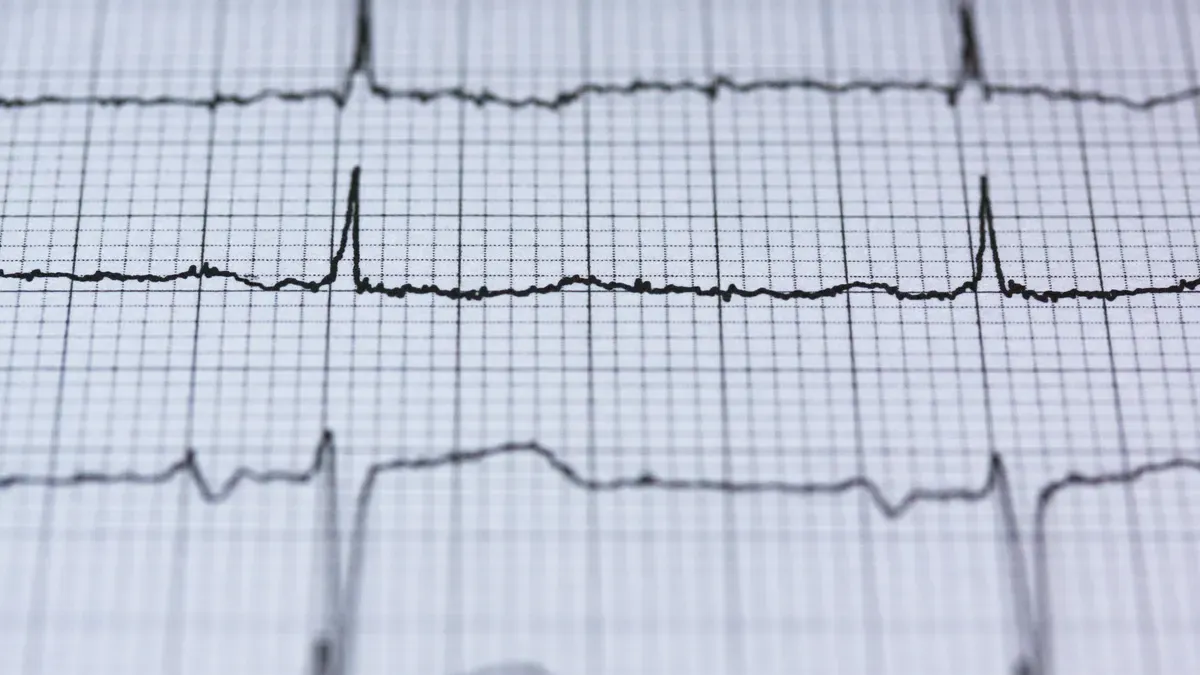
Heart rate variability (HRV) is not simply about how fast your heart beats. It looks at the small changes in time between individual heartbeats, known as R-R or N-N intervals.
Two of the most commonly used HRV metrics are RMSSD and SDNN. While both describe heart rate variability, they look at that variability from different perspectives.
RMSSD is more sensitive to short-term, beat-to-beat changes, making it useful for observing daily recovery and changes in your current state. SDNN reflects overall variability across a longer recording period, making it more useful for looking at broader trends.
Understanding the difference between RMSSD and SDNN can help you read HRV data more meaningfully instead of treating every daily number as a standalone measure of health.
Key Takeaways
RMSSD focuses on short-term changes between consecutive heartbeats and is commonly used when looking at daily recovery.
SDNN reflects overall heart rate variability across a longer measurement period and is more useful for observing broader trends.
The two metrics should not be treated as interchangeable. The measurement window affects what each metric tells you.
A single HRV reading does not tell the whole story. Looking at your own baseline and trends over time can provide more useful context.
Wearing smart rings can make HRV tracking more practical by collecting heart data consistently, particularly during periods of rest and sleep.
Understanding RMSSD for Daily Recovery
What Is RMSSD
RMSSD stands for Root Mean Square of Successive Differences.
In simple terms, it looks at how much the time between one heartbeat and the next changes from beat to beat. Rather than focusing on your average heart rate, RMSSD focuses on these short-term variations.
Because it is sensitive to relatively fast changes in heart rhythm, RMSSD is often used to observe changes in the body's recovery state.
For example, your HRV can change after a demanding workout, poor sleep, alcohol consumption, or other forms of physical or mental stress. RMSSD can respond to these short-term changes, making it useful when you want to compare your current reading with your usual pattern.
Why Is RMSSD Associated With the Parasympathetic Nervous System?
RMSSD is strongly influenced by parasympathetic activity, which is associated with the body's "rest and digest" response.
Your autonomic nervous system continuously adjusts heart rate in response to breathing, activity, stress, and recovery. Because parasympathetic signals can influence the heart relatively quickly, changes in this activity can appear in beat-to-beat variation.
Breathing is one example. Heart rate naturally changes slightly as you breathe in and out. These small changes contribute to the beat-to-beat variation that RMSSD captures.
The important point is that RMSSD is particularly sensitive to short-term changes in autonomic activity. This is why it can be useful for observing day-to-day recovery patterns.
Using RMSSD to Understand Daily Recovery
RMSSD can be useful when you want to understand how your body is responding to recent changes in your routine.
A lower-than-usual reading may occur after:
A hard workout
Poor or disrupted sleep
Alcohol consumption
Mental or physical stress
Changes to your usual routine
That does not automatically mean something is wrong. A single reading can be affected by many factors.
Instead, it is more useful to compare your readings with your own baseline and look for consistent changes over time.
Understanding SDNN for Long-Term Trends
What Is SDNN
SDNN stands for Standard Deviation of Normal-to-Normal intervals.
While RMSSD focuses on successive beat-to-beat differences, SDNN looks at the overall variation of normal heartbeat intervals within a recording period.
This makes the measurement window particularly important.
A longer recording captures changes occurring across different parts of your day, including periods of activity and rest. For this reason, SDNN is commonly associated with longer recording periods and broader measures of HRV.
Why Does Measurement Duration Matter?
HRV is highly dependent on when and how it is measured.
A short recording captures a relatively narrow snapshot of your physiological state. A longer recording captures more of the natural variation that occurs throughout the day.
This is one of the most important differences between RMSSD and SDNN:
RMSSD can provide useful information from shorter measurement windows, while SDNN is much more dependent on the duration of the recording.
For example, SDNN is traditionally used with longer recordings, including 24-hour measurements, when the goal is to assess overall HRV across a full day.
That does not mean a single SDNN number is automatically more informative than RMSSD. It means the two metrics answer different questions.
What Can SDNN Tell You?
SDNN reflects the overall variability present in the recorded heartbeat intervals.
Rather than being primarily focused on rapid beat-to-beat changes, it captures a broader picture of HRV across the measurement period.
This makes it useful for observing longer-term patterns when measurements are collected consistently under comparable conditions.
As with RMSSD, the most useful comparison is usually with your own history rather than an isolated number.
RMSSD vs SDNN: What's the Difference?
The simplest way to think about the two metrics is:
RMSSD looks closer at the short-term picture. SDNN looks at overall variability across a longer recording.
Metric |
What It Measures |
Typical Measurement Focus |
Practical Use |
|---|---|---|---|
RMSSD |
Short-term differences between consecutive heartbeat intervals |
Shorter or overnight measurement windows |
Observing daily recovery and short-term changes |
SDNN |
Overall variation in normal-to-normal intervals |
Longer recording periods |
Observing broader HRV patterns and long-term trends |
Neither metric is simply a "better" version of the other.
Instead, they provide different views of the same underlying phenomenon: heart rate variability.
Short-Term Sensitivity vs. Broader Variation
Imagine that your HRV is a landscape.
RMSSD is more like looking closely at the small changes from one point to the next. It can react to what has happened recently.
SDNN is more like stepping back and looking at how much the entire landscape varies across a longer period.
This is why the two metrics can be useful together.
A demanding workout might be reflected in a change in your short-term RMSSD pattern. Meanwhile, a broader change in your HRV over a longer period may be easier to understand by looking at SDNN trends.
The goal is not to choose one metric and ignore the other. It is to understand what each metric of HRV Metrics is designed to show.
Measurement Windows: Why Context Matters
One of the easiest mistakes when interpreting HRV is comparing numbers without considering how they were measured.
A one-minute measurement and a 24-hour recording do not provide the same type of information.
RMSSD
RMSSD is well suited to shorter measurement windows because it focuses on successive beat-to-beat differences. It can also be calculated from overnight recordings, making it practical for wearable devices that collect data while you sleep.
SDNN
SDNN is much more dependent on the recording duration. Longer recordings provide a broader view of the variability present across different physiological states.
This is why traditional SDNN interpretation often relies on longer recording periods.
For everyday wearable users, the most important principle is consistency: compare measurements collected under similar conditions and pay attention to trends rather than isolated values.
Daily Changes vs. Long-Term Trends
HRV naturally changes from day to day.
A late night, difficult workout, stressful day, travel, or alcohol consumption can all influence your short-term HRV pattern.
That does not necessarily represent a permanent change in your fitness or overall health.
This is where the difference between RMSSD and SDNN becomes particularly useful.
RMSSD is more responsive to short-term changes, so it can help you notice when your current recovery pattern differs from your usual baseline.
SDNN provides a broader view of HRV variation over a longer recording period, making it more useful when you want to understand longer-term patterns.
Instead of asking, "Is today's number good or bad?", a better question is:
"How does this reading compare with my usual pattern?"
Looking at your personal baseline can provide much more useful context than relying on a universal HRV target. Picking the right timer keeps your data accurate.
How Smart Rings Track HRV

Wearable devices such as smart rings can make HRV tracking easier by collecting heart data during periods when you are relatively still.
Smart rings typically use optical light sensors, such as PPG (photoplethysmography), to detect changes in blood volume associated with each heartbeat.
The system can then process the signal to identify heartbeat intervals and calculate HRV metrics.
Smart rings help track heart rate variability in steps:
Signal collection — Optical sensors collect changes in the pulse signal.
Signal processing — The system filters out noise and motion-related interference.
Interval calculation — Heartbeat intervals are identified from the processed signal.
HRV calculation — Metrics such as RMSSD and SDNN can then be calculated from the recorded intervals.
The quality and consistency of the underlying data matter just as much as the formula used to calculate the metric.
Why Overnight Tracking Can Be Useful
Sleep provides a relatively stable period for collecting physiological data because there is generally less movement than during the day.
For wearable HRV tracking, overnight measurements can therefore provide a consistent window for observing changes in your personal pattern.
For example, repeated overnight measurements can help you see whether your HRV tends to change after periods of poor sleep, heavy training, or other changes in your routine.
This is more useful than treating one isolated measurement as a definitive statement about your health.
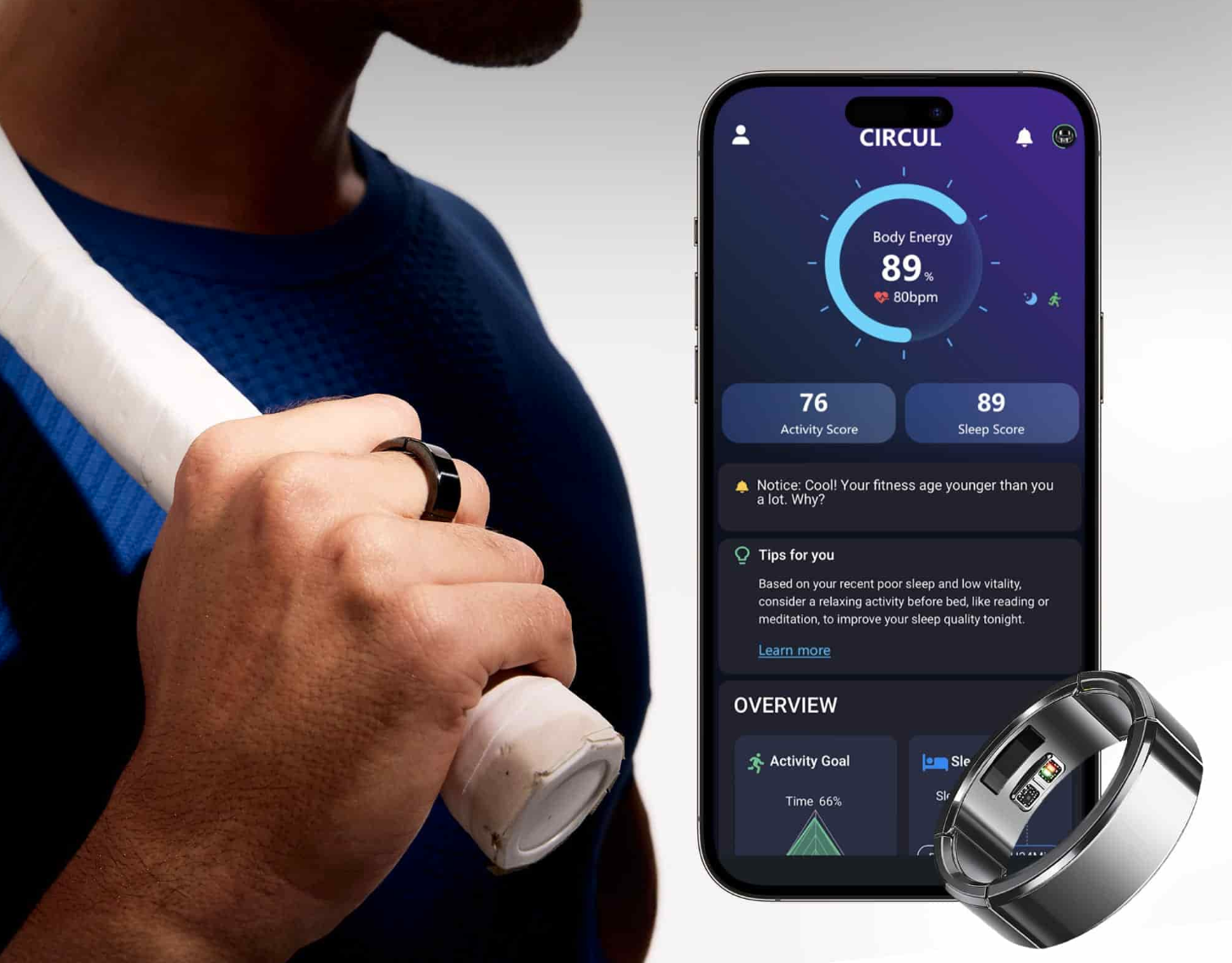
With CIRCUL RING 2 MAX, continuous heart-related data collection is part of the device's broader approach to understanding your wellness patterns. CIRCUL focuses on collecting data consistently so that individual measurements can be interpreted in the context of your personal trends.
Building a More Useful HRV Baseline
Your HRV is personal.
Age, fitness level, sleep, daily routine, stress, and many other factors can influence your typical range. This is why there is no single HRV number that should automatically be considered "good" for everyone.
Instead of comparing yourself with someone else's number, build a picture of your own baseline.
A useful approach is to:
Measure consistently
Compare readings under similar conditions
Look at trends rather than isolated changes
Consider recent sleep, exercise, stress, and lifestyle factors
Use multiple days of data to understand your normal pattern
This makes HRV more useful as a personal wellness signal.
Using RMSSD and SDNN Together
RMSSD and SDNN do not need to compete with each other.
They can provide complementary information.
For example, RMSSD may help you notice a short-term change after a demanding day, while longer-term SDNN patterns can provide additional context about how your HRV is changing over time.
Together, they can help create a more complete picture of how your HRV varies across different time scales.
Question |
Metric to Consider |
Has my HRV changed compared with my recent pattern? |
RMSSD |
How is my short-term recovery pattern changing? |
RMSSD |
What does my HRV look like across a longer recording period? |
SDNN |
How is my broader HRV pattern changing over time? |
SDNN |
The key is to use each metric for what it can actually tell you.
Night tracking works better than short morning checks:
Comprehensive Recovery Window: Sleep lets your body heal and recover fully.
Uncovers Hidden Variable Impact: Night tests show how late food alters rest.
Superior Predictive Ability: Sleep data predicts tomorrow's injury risk very well.
Smart wearables give you clear health facts daily.
Use this data to raise your daily energy.
Train hard and build strong long-term resilience.
FAQs
Which HRV metric is better for daily recovery?
RMSSD is generally more useful for observing short-term changes in HRV and daily recovery patterns.
It is sensitive to beat-to-beat variation and can respond to recent changes such as exercise, sleep, alcohol, or stress.
However, one reading should not be interpreted in isolation. Looking at your own baseline and recent trend provides more useful context.
Why is SDNN associated with longer measurement periods?
SDNN measures the overall standard deviation of normal-to-normal intervals within a recording period.
Because the result depends strongly on the duration of that recording, longer measurement periods provide a broader view of HRV variation.
Traditional applications commonly use longer recordings, including 24-hour measurements.
Can one low RMSSD reading mean that I am unhealthy?
Not necessarily.
HRV can change from day to day in response to sleep, exercise, stress, alcohol, and other factors.
A single lower reading is therefore better understood as one data point rather than a diagnosis or definitive assessment of your health.
Look at your personal trend and consider what may have changed in your routine.
How do smart rings measure HRV?
Smart rings use optical sensors such as PPG to collect pulse signals.
The device processes these signals to identify heartbeat intervals and can then calculate HRV metrics such as RMSSD and SDNN.
Collecting data consistently, especially during relatively stable periods such as sleep, can make it easier to observe personal HRV patterns over time.
The Bottom Line
RMSSD and SDNN describe different aspects of heart rate variability.
RMSSD is more sensitive to short-term beat-to-beat changes, making it useful for observing daily recovery patterns.
SDNN reflects overall variability across a measurement period, making it more useful for understanding broader HRV patterns when longer recordings are available.
Neither number tells the complete story on its own.
The real value of HRV comes from understanding your own baseline, your trends, and the context around the data.
With consistent tracking from a smart ring such as CIRCUL RING 2 MAX, HRV can become one more useful wellness signal for understanding how your body responds to everyday changes in sleep, activity, stress, and recovery.
CIRCUL health metrics are only intended for wellness and lifestyle insights or references.