How do smart rings measure health?
The answer starts with a small but important piece of technology: photoplethysmography, or PPG.
PPG sensors use light to observe changes in blood volume within tissue. In a smart ring, this optical signal can be processed into useful measurements such as heart rate and other wellness insights.
But the sensor itself is only part of the equation.
The quality of a smart ring measurement also depends on how the sensor sits against the skin, how much the ring moves, the surrounding optical environment, and how the device processes the signal.
This is why two smart rings with similar sensors can produce different results.
In this guide, we will explain how smart rings measure health, how PPG sensors work, what affects signal quality, and why fit and sensor stabilization matters. We will also look at how the CIRCUL RING 2 MAX approaches continuous monitoring through its combination of PPG, SST™ Ultra 2.0, and adaptive fit technology.
Key Takeaways
Smart rings commonly use PPG sensors to collect optical signals from tissue.
PPG can support measurements such as heart rate and SpO₂ when used with appropriate sensing and signal processing.
Sensor placement, fit, movement, ambient light, and physiological factors can all affect signal quality.
A stable fit helps maintain a consistent relationship between the sensor and the skin.
The CIRCUL RING 2 MAX combines 3-Wavelength PPG, SST™ Ultra 2.0, and an Adaptive Sizing Structure.
CIRCUL provides true 24/7 continuous monitoring of HR, HRV, and Body Energy.
For SpO₂, the appropriate CIRCUL terminology is nighttime continuous SpO₂ monitoring.
Smart ring measurements should be understood as wellness and lifestyle insights rather than a replacement for medical diagnosis or treatment.
How Smart Rings Measure Health: The PPG Core
What Is PPG?
PPG stands for photoplethysmography.
In simple terms, it is an optical sensing method that uses light to observe changes in blood volume in tissue.
When the heart beats, blood volume in the small vessels beneath the skin changes. A PPG sensor shines light into the tissue and measures how that light interacts with the tissue and returns to the sensor.
The resulting signal forms a waveform that changes with the cardiac cycle.
Smart ring algorithms can then process this waveform to estimate physiological measurements such as heart rate.
This is one of the fundamental technologies behind modern wearable health and wellness devices.
Why Use Multiple Wavelengths?
Different wavelengths of light interact with tissue differently.
That is why advanced wearable devices can use multiple wavelengths rather than relying on a single light source.
The CIRCUL RING 2 MAX uses 3-Wavelength PPG, combining optical sensing with other onboard sensors and signal-processing technologies.
The purpose is not simply to collect more light. It is to give the sensing system different optical information that can be processed for different measurements.
This is particularly relevant when a small wearable device needs to collect physiological signals from a relatively compact measurement site.
How the CIRCUL RING 2 MAX Uses PPG
The CIRCUL RING 2 MAX combines 3-Wavelength PPG with:
SST™ Ultra 2.0
G-sensor
Temperature sensor
Signal-processing algorithms
Together, these components form a sensing system rather than a standalone optical sensor.
The ring provides true 24/7 continuous monitoring of HR, HRV, and Body Energy, allowing users to observe physiological patterns across different parts of daily life rather than relying only on occasional measurements.
This distinction is important.
Continuous monitoring does not mean that every physiological metric is measured continuously in the same way. CIRCUL uses different measurement approaches for different metrics.
Why Smart Ring Fit Matters for Signal Quality
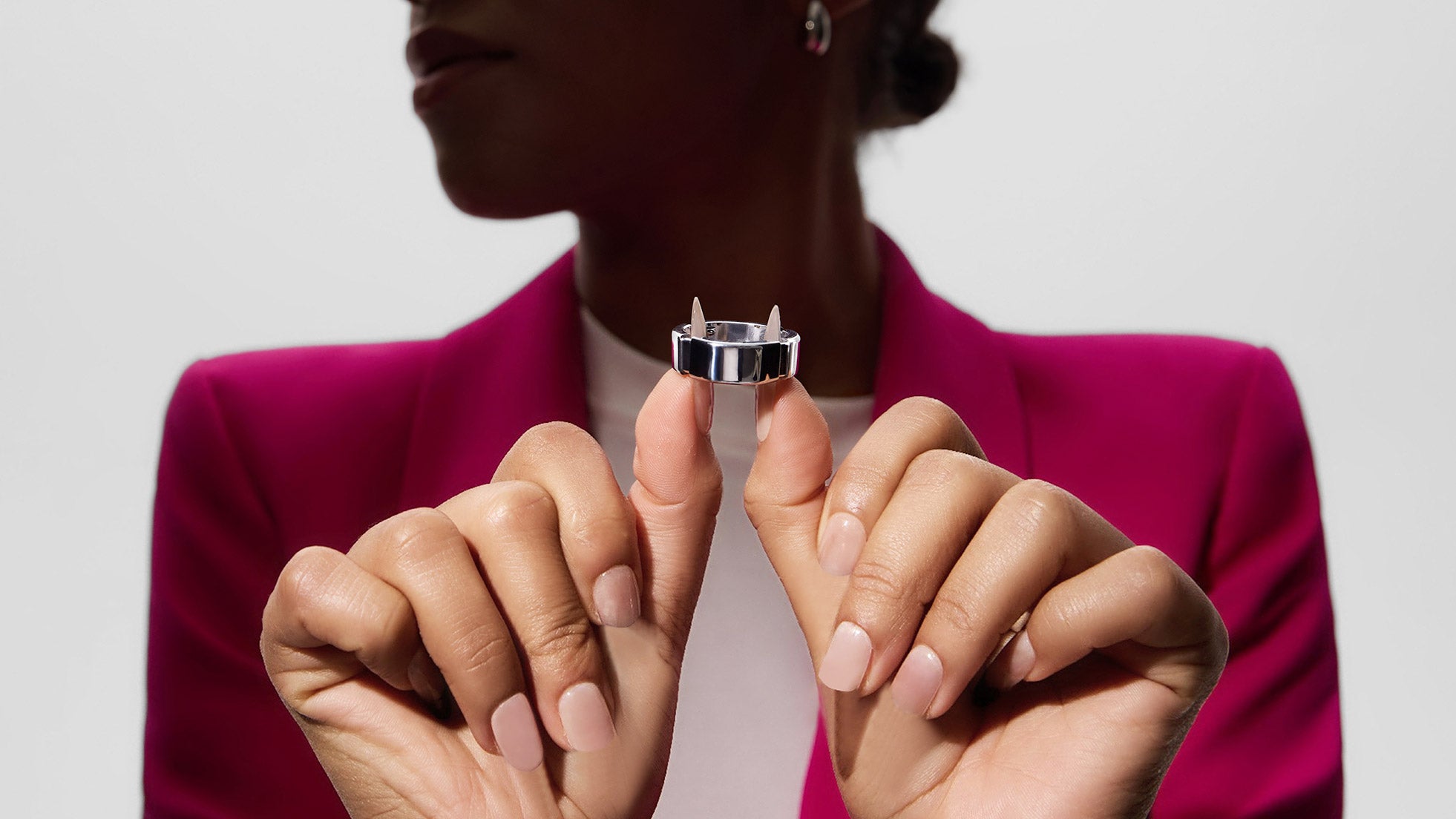
A PPG sensor needs a reasonably consistent relationship with the skin to collect a useful optical signal. That makes physical design an important part of smart ring measurement.
-
Sensor placement: A smart ring can rotate around the finger during normal activities. Even relatively small changes in sensor position can alter the relationship between the optical components and the underlying tissue.
The goal is therefore not simply to place a sensor inside the ring. The sensor needs to remain appropriately positioned while the user moves, sleeps, exercises, and goes about daily activities.
-
Fit quality: Fit affects both comfort and sensor stability.
A ring that is too loose may move more freely. A ring that is too tight can become uncomfortable, particularly when finger circumference changes during the day.
For a wearable intended for extended use, the ideal fit needs to balance secure positioning with comfort.
This is one reason adaptive fit is an important part of smart ring design.
The CIRCUL RING 2 MAX uses an Adaptive Sizing Structure with S / M / L sizing to accommodate changes in finger circumference.
-
Motion artifacts: Movement is one of the most common challenges for optical wearable sensors.
When your hand moves, the ring and the underlying tissue can move relative to each other. This can change the optical path and introduce motion-related noise into the PPG signal.
Algorithms can compensate for some of this noise, but the physical design still matters.
A stable ring position gives the signal-processing system a more consistent measurement environment.
-
Ambient light interference: PPG relies on controlled light interacting with tissue.
Unwanted ambient light can therefore interfere with the optical measurement, particularly if the relationship between the sensor and skin changes significantly.
A well-designed sensing system uses optical and algorithmic approaches to manage this interference.
Again, fit plays a supporting role: stable sensor contact helps maintain a more predictable optical environment.
-
Physiological factors: Not every source of signal variation comes from the device.
Blood flow can naturally change with temperature, activity, stress, body position, and other physiological conditions. These changes can influence the optical signal collected by a wearable.
This is an important point when interpreting smart ring data.
A change in a measurement does not automatically mean that the device has become less accurate. Sometimes the signal is reflecting a genuine change in the body's physiological state.
Adaptive Fit: The Mechanical Side of Smart Ring Accuracy
Sensor technology often gets most of the attention, but mechanical engineering is equally important.
The CIRCUL RING 2 MAX uses an Adaptive Sizing Structure designed to accommodate normal changes in finger size.
Instead of relying entirely on a fixed ring circumference, the adaptive structure allows the ring to adjust to changes in the finger while maintaining a comfortable fit.
This can be particularly useful because finger circumference is not constant.
Your fingers can feel different in the morning, after exercise, in warmer conditions, or after several hours of wear.
A fixed-size ring has to accommodate these changes passively.
An adaptive design can respond mechanically.
Adaptive Fit and Sensor Stability
The relationship can be summarized as:
Adaptive fit
↓
More consistent ring positioning
↓
More stable skin-to-sensor contact
↓
More consistent optical measurement conditions
This does not mean that adaptive fit guarantees perfect accuracy.
Measurement quality depends on multiple factors, including sensor technology, signal processing, movement, physiology, placement, and measurement conditions.
What adaptive fit can do is address one important variable: the physical relationship between the sensor and the skin.
SST™ Ultra 2.0 and Sensor Stabilization
The CIRCUL RING 2 MAX also uses SST™ Ultra 2.0, where SST stands for Sensor Stabilization Technology.
The purpose of sensor stabilization is closely connected to the fit problem.
If the ring moves excessively, the sensor-to-skin relationship can change. A stabilization system helps maintain a more consistent sensing position while the wearer moves.
This becomes especially useful for a device designed to collect measurements over extended periods.
The combination of Adaptive Sizing Structure + SST™ Ultra 2.0 + 3-Wavelength PPG therefore addresses different parts of the same overall measurement challenge:
the adaptive structure helps accommodate changes in finger size;
sensor stabilization supports consistent sensor positioning;
PPG collects the optical signal;
signal processing converts that signal into usable measurements.
Smart Ring Accuracy: Resting vs. Active Conditions
One of the most important things to understand about wearable measurement accuracy is that measurement conditions matter.
A smart ring is generally operating in a more stable environment when the wearer is resting or sleeping than during vigorous movement.
During rest, the ring and finger move relatively little. This can make it easier for the optical system to maintain a stable signal.
During exercise, however, hand movement, changes in circulation, perspiration, and other factors can introduce additional signal variation.
That does not make exercise data useless. It simply means that measurement context matters when interpreting wearable data.
For users interested in long-term wellness patterns, consistent measurements collected across comparable conditions can often be more informative than focusing on a single isolated number.
Smart Rings and Heart Rate Monitoring
Heart rate is one of the most established applications of PPG technology in wearables.
The PPG waveform contains periodic changes associated with the cardiac cycle. Algorithms can identify these patterns and estimate heart rate.
For a smart ring, the finger provides the measurement site while the ring's optical system collects the signal.
The CIRCUL RING 2 MAX supports true 24/7 continuous monitoring of heart rate and HRV, providing data across rest, sleep, everyday activity, and recovery periods.
What About Heart Rate During Exercise?
Exercise introduces additional complexity.
Running, cycling, strength training, and other activities create movement artifacts that can affect optical measurements.
This is a general challenge for wrist- and finger-based optical wearables.
For high-intensity training where immediate exercise heart rate is the primary objective, a chest strap designed specifically for exercise monitoring may still be preferable.
For broader daily wellness tracking, however, a smart ring can provide a different type of value by remaining comfortable enough to wear across the day and night.
Smart Rings and HRV
Heart rate variability, or HRV, describes variation in the time between successive heartbeats.
Unlike heart rate, which asks how many beats occur per minute, HRV looks at how the intervals between beats vary.
This can provide a useful window into changes in autonomic regulation and recovery-related patterns.
The CIRCUL RING 2 MAX supports HRV monitoring as part of its true 24/7 continuous monitoring capability.
CIRCUL also uses HRV measures including RMSSD and SDNN.
These metrics should not be treated as simple “good” or “bad” scores. Their interpretation depends on the measurement period, individual baseline, context, and longer-term pattern.
For this reason, consistent tracking over time can be more useful than reacting to a single daily value.
Smart Rings and Sleep Tracking

Sleep is another major area where smart rings use multiple physiological signals.
During sleep, the wearer is relatively still, creating a useful environment for long-duration physiological monitoring.
The CIRCUL RING 2 MAX supports Sleep stages, Sleep Debt, and Sleep Recovery Assessment. It also provides nighttime continuous SpO₂ monitoring.
These measurements can help users understand patterns in their sleep and overnight wellness data.
Sleep Stages
Sleep tracking commonly divides sleep into stages such as light sleep, deep sleep, and REM sleep.
Rather than directly observing brain activity like a clinical polysomnography system, a wearable estimates sleep-related patterns using signals available from the device.
That distinction matters.
Smart rings and sleep tracking can provide useful longitudinal wellness insights, but it should not be presented as a direct replacement for a clinical sleep study.
Sleep Apnea Risk Assessment
CIRCUL uses the term Sleep Apnea Risk Assessment, not Sleep apnea detection or diagnosis.
The system uses nighttime physiological data, including SpO₂-related information, to provide a risk-oriented assessment.
The distinction is important: a wellness wearable can help identify patterns that may warrant further attention, but it should not be presented as independently diagnosing a medical condition.
Why Clinical Validation Matters
When evaluating smart ring accuracy, specifications alone are not enough.
A sensor can have impressive technical specifications and still behave differently under real-world conditions.
Clinical and research validation can provide additional evidence about how a technology performs under defined conditions.
However, it is also important to distinguish between the validation of a particular technology, a previous product generation, and the current consumer product.
This distinction allows clinical evidence to be discussed without overstating what that evidence proves about a particular consumer device.
Blood Pressure Monitoring in Smart Rings
Blood pressure is a more technically challenging application for wearable devices.
Unlike heart rate, blood pressure is not simply a matter of counting pulses. It involves multiple physiological variables, and cuffless approaches require sophisticated sensing and modeling.
The CIRCUL RING 2 MAX provides cuff-free blood pressure monitoring for wellness and research reference.
When discussing this feature, it is important to use the appropriate scope.
It should be understood as a wellness-oriented measurement rather than a replacement for clinical blood pressure assessment or medical decision-making.
This is also why CIRCUL's official terminology uses blood pressure monitoring rather than continuous or 24/7 blood pressure monitoring.
How SpO₂ Fits Into Smart Ring Health Monitoring
SpO₂ refers to peripheral blood oxygen saturation.
Smart rings can use optical sensing to estimate SpO₂, but the measurement context matters.
For CIRCUL, the approved external terminology is nighttime continuous SpO₂ monitoring. This is particularly relevant to sleep monitoring because overnight data can be viewed alongside other physiological signals.
CIRCUL also uses Sleep Apnea Risk Assessment when discussing sleep-related breathing insights.
The goal is to provide wellness information about overnight patterns—not to claim that the ring independently diagnoses sleep apnea.
Practical Tips for Better Smart Ring Data
Even sophisticated wearable technology benefits from good usage habits.
1. Choose the Appropriate Size
Start with the correct base size.
The CIRCUL RING 2 MAX uses S / M / L sizing and an Adaptive Sizing Structure to accommodate changes in finger circumference.
The ring should feel secure without creating excessive pressure.
2. Wear It Consistently
If you want to understand trends, consistency matters.
Wearing the ring in a similar position and across similar daily routines can make changes in your data easier to interpret.
For continuous heart rate, HRV, and Body Energy monitoring, consistent wear also allows the system to collect information across a wider range of daily conditions.
3. Keep the Sensor Surface Clean
Oils, dirt, and other residue can interfere with the optical sensing environment.
Regularly cleaning the ring according to the manufacturer's care instructions can help maintain a clean sensor surface.
4. Keep the App and Firmware Updated
Wearable devices rely on both hardware and software.
Firmware and app updates may include improvements to algorithms, data processing, and user experience. Keeping the system updated ensures that you have access to the latest supported software.
5. Consider the Measurement Context
Do not judge a wearable based on one isolated reading.
Movement, temperature, sleep, exercise, stress, circulation, and other factors can influence physiological measurements.
Looking at patterns over time can provide more useful wellness context.
How to Think About Smart Ring Accuracy
There is no single number called “smart ring accuracy.”
Accuracy depends on:
What is being measured
How the measurement is collected
The user's activity level
Sensor placement
Ring fit
Motion
Physiological conditions
Signal-processing algorithms
The validation method used
This is why a responsible evaluation of a smart ring should look beyond a single accuracy percentage.
A strong wearable system needs to combine hardware, mechanical design, software, and appropriate measurement methodology.
FAQ
How do smart rings measure health?
Smart rings commonly use optical sensors such as PPG to collect physiological signals from tissue.
The device then uses signal processing and algorithms to convert those signals into measurements and wellness insights such as heart rate, HRV, sleep-related metrics, and, depending on the device, SpO₂ and blood pressure monitoring.
What is PPG in a smart ring?
PPG stands for photoplethysmography.
It uses light to observe changes associated with blood volume in tissue. Smart rings can process these optical signals to estimate physiological measurements such as heart rate.
Are smart rings accurate?
Smart ring accuracy depends on the metric, measurement conditions, fit, movement, sensor technology, and signal-processing system.
Resting and overnight measurements can provide a relatively stable sensing environment, while vigorous movement can introduce additional optical noise.
For this reason, smart ring data is best interpreted in context and over time.
Does ring fit affect smart ring accuracy?
Fit can affect sensor positioning and the optical relationship between the sensor and skin.
A ring that moves excessively may create a less consistent measurement environment, while excessive pressure can make long-term wear uncomfortable.
Adaptive fit is designed to help balance stable contact and comfort.
How does the CIRCUL RING 2 MAX maintain sensor contact?
The CIRCUL RING 2 MAX combines an Adaptive Sizing Structure with SST™ Ultra 2.0 to support a stable and comfortable sensor position as finger circumference changes.
What makes the CIRCUL RING 2 MAX different?
The CIRCUL RING 2 MAX combines 3-Wavelength PPG, SST™ Ultra 2.0, and Adaptive Sizing Structure with true 24/7 continuous HR, HRV, and Body Energy monitoring.
The combination is important because wearable measurement depends on the interaction between sensing hardware, physical fit, signal processing, and long-term wearability.
The Bottom Line
Understanding how smart rings measure health requires looking beyond the sensor specification.
PPG provides the optical foundation. Signal processing turns raw optical information into useful measurements. Fit and sensor stabilization help create a consistent measurement environment. And long-term wearability makes it possible to observe patterns over time.
The CIRCUL RING 2 MAX approaches this as a complete system, combining 3-Wavelength PPG, SST™ Ultra 2.0, Adaptive Sizing Structure, and true 24/7 continuous monitoring of HR, HRV, and Body Energy.
The result is not simply a ring with sensors inside it.
It is a wearable sensing system designed around the relationship between the sensor, the ring, and the person wearing it.
Wellness Disclaimer
CIRCUL RING provides wellness and lifestyle insights and is not intended to diagnose, treat, cure, or prevent any disease or medical condition. Health measurements and insights should not replace professional medical advice, diagnosis, or treatment.